
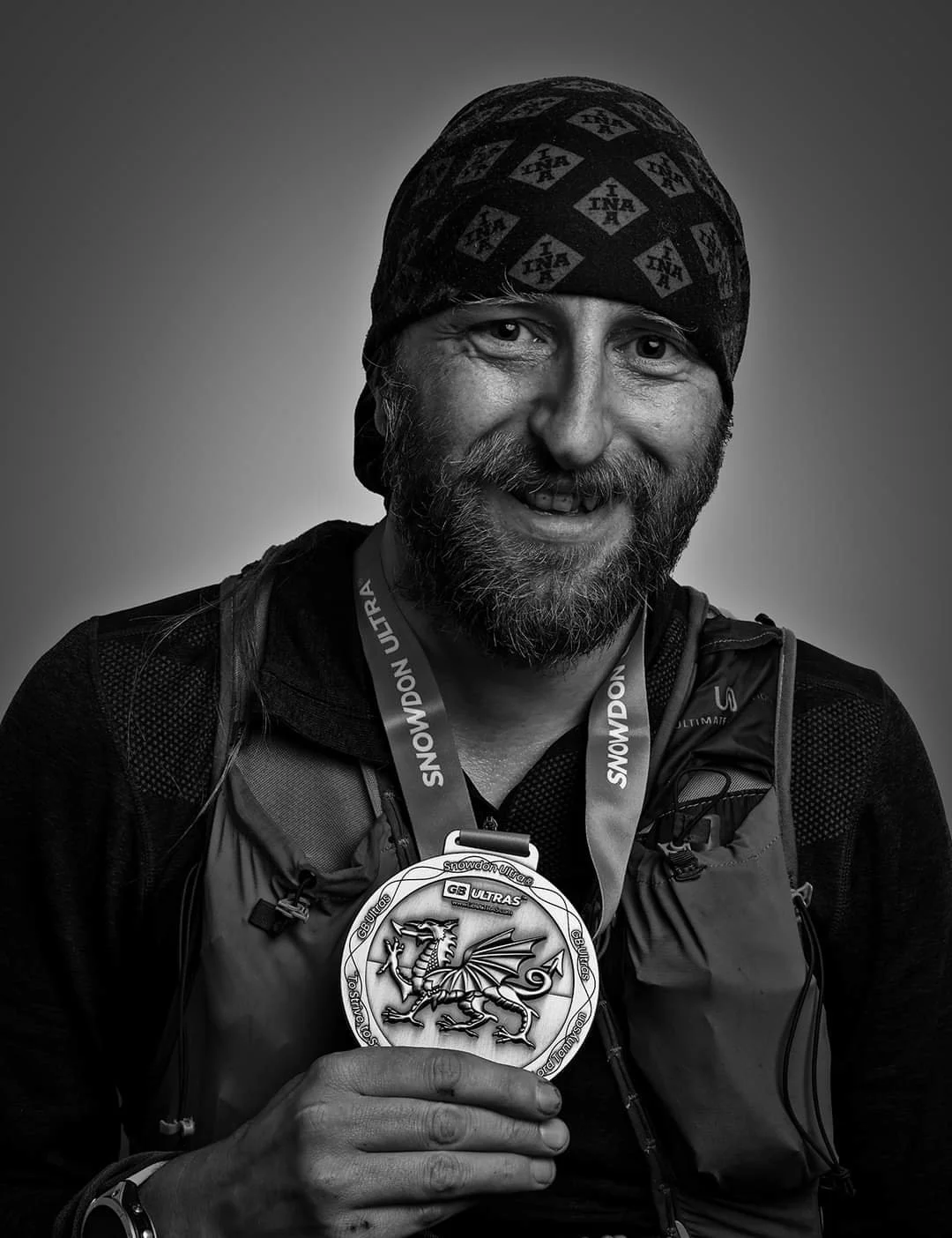
DAN DURANCE
Running has always been part of my story. But like most stories worth telling, mine took a few unexpected turns.
It started at school. I represented Eryri at the Welsh Schools Championships in the 800m and came home with a bronze. Then life moved on, and running slipped away. Through some hard chapters, the spark faded to almost nothing.
It wasn't until my 30s that things shifted. Short jogs, then the trails. A first marathon at Chester, then ultra running, and a whole new world of what's possible.
“Running gave me my life back. Coaching lets me pay that forward.”
The hard chapters weren't brief.
In my late teens and early twenties I was addicted to drugs. I pulled away from everything. Became reclusive, watched my mental health come apart, and let my world shrink until there wasn't much left of it.
Later on I found out I'd been living with autism and ADHD the whole time, undiagnosed. That explained a lot. A lot of why everyday things had felt harder than they seemed to be for everyone else. Understanding it didn't fix anything overnight, but it helped me stop fighting my own head and start working with it.
Running was how I keep on top of the noise. One foot in front of the other, somewhere quiet, until things made sense again. Getting clean was hard. Learning to do normal life properly was harder, and like many people I’m still figuring parts of it out. But when it gets heavy, a few hours on the trail is exactly what I need and it sorts my head out better than any drug ever could.
“That need for headspace eventually turned into racing — and racing brought its own kind of obsession.”
That's probably why DNFs get to me as much as they do. You replay them for weeks, sure you stopped too early, picking apart what you'd do differently. It can turn into a bit of an obsession. But I've come round to the idea that failing at something is usually the only way you actually learn how to do it. Took me a long time to see that as useful rather than just painful.
The obsession had an upside. I went deep on how running actually works: the training, the fuelling, the mental side. And I kept wanting to tell other people what I'd found. I spent years assuming I couldn't do much. Turned out I was wrong about that, and most people are wrong about it too. Helping someone see what they're actually capable of is the part of this I care about and enjoy the most.
I got to coaching the long way round, and not too long ago. I'm not going to pretend I've been doing this for twenty years. What I have done is obsess over getting it right: the science, the training theory, the nutrition, the mental side. I’ve learned it because I’ve needed it myself, and I keep learning because the people I coach deserve current thinking, not recycled habits. If anything, rebuilding my own running from nothing means I understand the doubt, the slow starts and the setbacks better than someone who's never had to.
That's TUFRunCo. Took the long way round so you don't have to.
qualifications

uesca ultrarunning coach certification
2025
lirf off road, hill and fell leader
2026
rec outdoor first aid certified
2026
2025